A windowless meeting room need not feel bare, nor must a corridor where living plants struggle. These spaces often need a softer visual element, but adding ordinary planters can create a cycle of disappointing growth and replacement.
Preserved moss walls offer a different approach. They use once-living natural material that has been preserved for decorative use, rather than actively growing plants. Because the moss is no longer living, it does not need sunlight, soil, or regular watering to maintain its appearance. Our designers bring texture and color into offices where traditional greenery struggles.
Low Light Limits Living Plants, Not Preserved Moss
Light is a basic requirement for living plants. Even species described as low-light tolerant need adequate illumination to support growth. Deep interior offices, enclosed meeting rooms, and corridors with limited natural light may fall below that threshold,
Preserved moss avoids several constraints:
- No photosynthesis: The material does not depend on daylight or grow lights to remain decorative.
- No irrigation: The installation does not require a watering system or routine soil moisture checks.
- No active growth: Teams do not need to prune spreading stems or manage changing plant shapes.
- Flexible placement: Designs can occupy walls in rooms that would not support a conventional living garden.
- Consistent coverage: Properly maintained pieces retain a planned composition rather than developing uneven growth.
This distinction is important when comparing preserved moss with a living wall. Living walls contain actively growing plants that require suitable lighting, water, and ongoing servicing, with different care requirements.
Our guide to moss and living walls explains how these choices serve different building needs. If a corridor lacks sufficient light, the answer may be a preserved feature rather than attempting to force a living installation into unsuitable conditions.
Texture and Custom Design Create a Purposeful Focal Point
Low-light interiors can feel visually flat, especially when walls are dominated by paint, glass, and uniform furniture. Moss adds depth through its surface, shape, and natural variation. It can complement a restrained workplace palette without needing a large floor planter or blocking a walkway.
A custom project may consider:
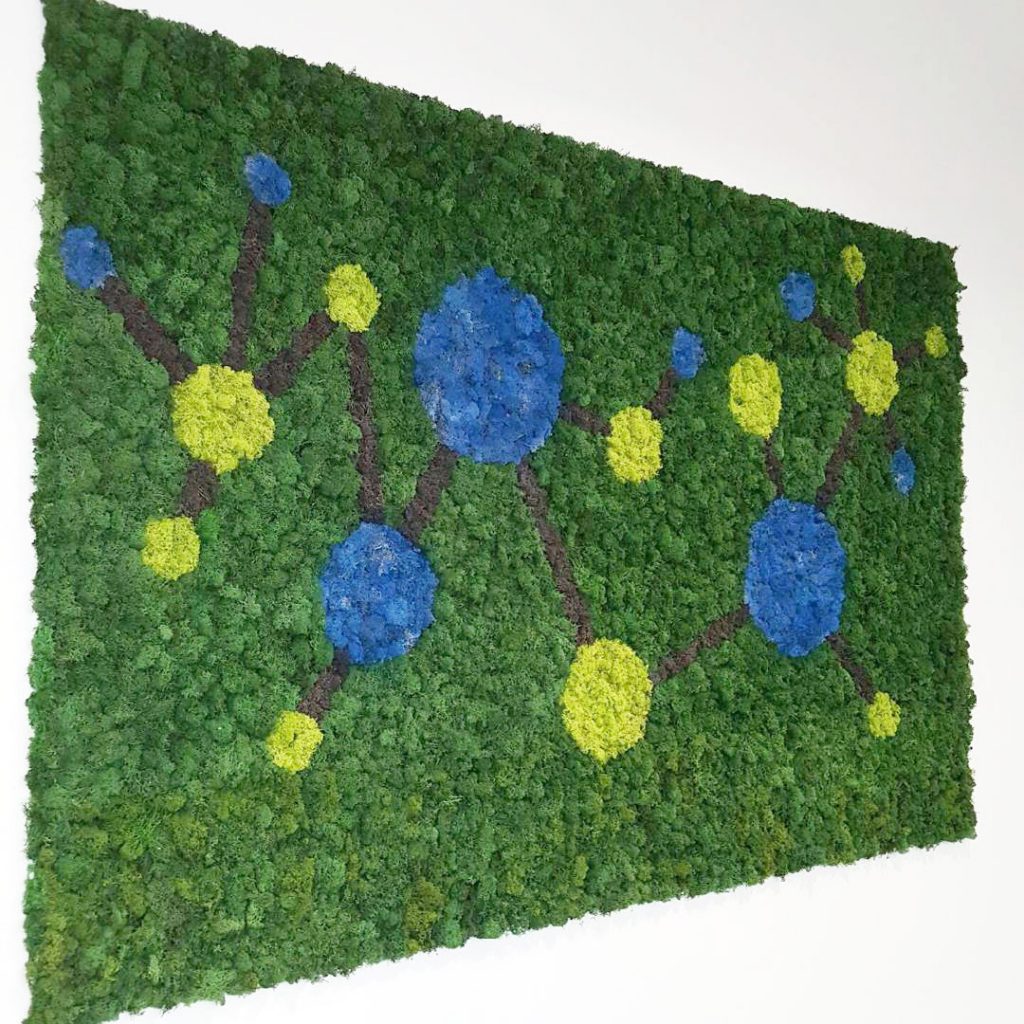
- Color palette: Different moss tones can coordinate with furnishings, finishes, and brand colors.
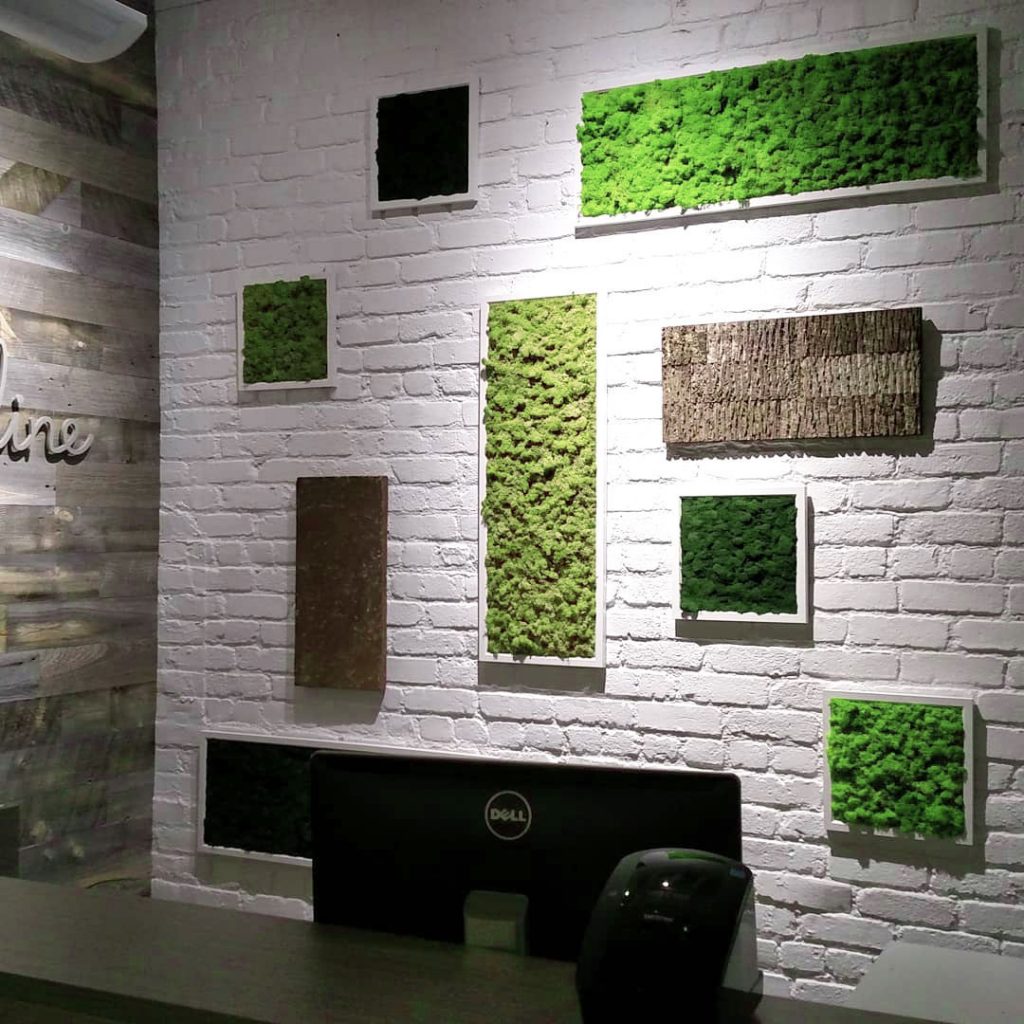
- Panel scale: A small feature can highlight a reception wall, while a larger installation anchors a lounge.
- Framing choices: Wood, stone, or other design details can connect the feature with existing architecture.
- Brand integration: Logos and lettering can become part of a custom moss-art composition.
- Sightlines: Placement should respect doors, circulation paths, signage, and how people use the room.
The design process is more than selecting a rectangle of green. Our team considers proportions and the relationship between textured materials and surrounding surfaces. A narrow hallway calls for a different composition than a spacious reception area,
Preserved moss can also fit within a broader interior landscape. Living plants may remain near suitable windows, while moss fills an interior feature wall and replicas support hard-to-reach spots. The result is a coherent greenery strategy that acknowledges each area’s actual conditions.
Minimal Upkeep Still Calls for Thoughtful Placement
Preserved moss walls are low maintenance, not indestructible. Because the material is decorative and no longer growing, irrigation and fertilizer are unnecessary. However, location and environmental stability still affect how a finished piece performs over time.
Before installation, a professional design review may assess:
- Direct sunlight: Strong exposure can affect preserved materials and may contribute to fading over time.
- Moisture exposure: Water contact and persistently unsuitable humidity can damage an installation.
- Physical contact: Busy corridors may need placement that discourages frequent touching or brushing.
- Cleaning expectations: Light dusting or other care should follow the maker’s recommendations.
- Wall suitability: Mounting, dimensions, and access need to align with the building’s materials and usage.
Low light alone is not a reason to disregard surrounding conditions. A feature wall beside an entry with frequent moisture exposure presents different challenges from one in a stable, enclosed conference room. Assessing the environment early helps preserve the intended finish and reduce avoidable maintenance concerns.
Our article on custom moss wall benefits explores how preserved greenery can provide strong visual impact without the care demands of live plants. The same advantages can translate to darker offices, with suitable placement.
A moss wall should not be described as a living air purifier or a replacement for building ventilation. Its primary value is visual: a natural-looking material that introduces texture, individuality, and a connection to botanical design. For companies that want the appearance of greenery in darker areas, that can be exactly the right result.
The most successful installations respect what preserved moss can and cannot do. With careful design, a low-light office gains an attractive feature without requiring employees to manage complicated upkeep.
Let Darker Spaces Make a Stronger Impression
To explore custom preserved moss art for your office, contact Creative Plant Design, Inc. Our team can develop a wall feature that suits your lighting, architecture, brand, and maintenance expectations.