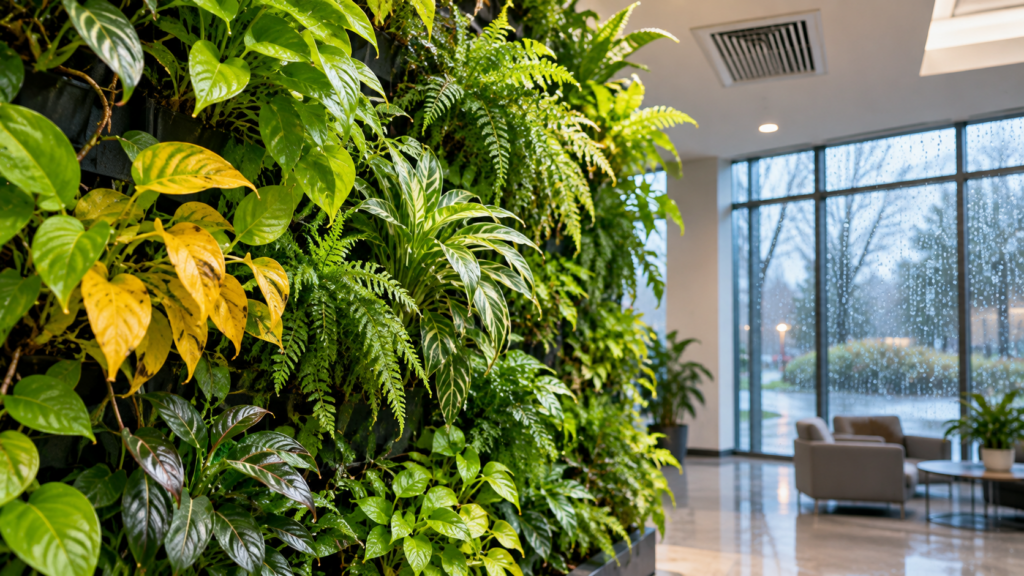
A living wall can look lush through summer and still develop yellow patches after the building’s heating system comes on. One section might dry out near a ceiling vent while another remains wet for days. In a commercial lobby, those differences can become obvious quickly because the plants are arranged together on one highly visible surface.
We care for living walls as complete systems, not simply collections of leaves. Across Bay Area workplaces, winter maintenance means checking the irrigation method, light exposure, airflow, and growing conditions before making adjustments. Cooler weather does not automatically call for more water or a different plant. It calls for a closer look at what has changed around the installation.
Recheck Irrigation When Indoor Conditions Change
Living walls do not all receive water the same way. Some systems use plumbed irrigation, others rely on tray overflow, and certain installations are watered manually during service visits. Seasonal adjustments must suit the specific equipment and the plants growing within it. A fixed schedule can produce uneven results when daylight and indoor temperatures change.
During colder months, we review:
- Water distribution: Check whether upper and lower planting sections receive appropriate moisture without persistent dry patches.
- Irrigation lines: Look for blockages, leaking connections, and irregular flow in systems equipped with automatic watering.
- Drainage: Confirm runoff is managed so water does not collect against finishes, floors, or underlying walls.
- Growing media: Assess moisture at the root zone rather than relying solely on how the foliage looks.
- System settings: Revisit timer or watering frequency when plant demand changes with the season.
Yellow leaves can result from excess moisture, insufficient light, or ordinary aging. A drooping plant may have wet roots rather than be thirsty. We investigate the cause before increasing watering, particularly when a wall contains species with different moisture requirements.
Our guide to year-round living wall maintenance details how irrigation, drainage, and plant health need to be assessed together. Checking the wall’s plumbing and nearby finishes also helps identify small leaks before they affect the property.
Balance Shorter Daylight With Heating and Airflow
Even an indoor living wall responds to seasonal light changes. In winter, daylight may reach a lobby at a different angle or disappear sooner behind neighboring buildings. Meanwhile, heating equipment can lower relative humidity and direct warm air onto particular planting sections. An attractive location in July may therefore need closer attention in December.
We assess several environmental factors:
- Available light: Compare actual brightness across the wall, including sections shaded by architectural features.
- Supplemental lighting: Review fixtures and operating schedules where dedicated plant lighting is part of the design.
- Heating vents: Identify foliage exposed to a direct stream of warm, drying air.
- Humidity patterns: Watch for crisp leaf edges and other stress without assuming humidity is the only cause.
- Species response: Determine whether slower growth is seasonal or reflects a genuine mismatch with the location.
Moving an entire living wall is rarely practical. Instead, we may recommend adjusting the surrounding environment, revisiting light settings, or replacing individual specimens with varieties better suited to that position. Building personnel should handle HVAC and electrical modifications where required.
Winter care also means resisting the temptation to fertilize away every sign of slow growth. A plant receiving less light may use resources more slowly. Feeding should follow plant condition and the maintenance plan, not the calendar alone.
Keep the Display Even Through Pruning and Monitoring
A successful living wall must remain attractive from across the lobby and healthy up close. A few failing plants can leave visible gaps; overgrown sections can shade neighbors and interrupt airflow. Regular grooming and timely replacement help maintain the intended design without rebuilding the entire feature.
Our winter maintenance checks include:
- Pruning: Trim excess growth that crowds surrounding plants or changes the wall’s intended shape.
- Cleaning: Remove dead leaves and dust so foliage and irrigation outlets remain accessible.
- Pest checks: Examine stressed sections for spider mites, mealybugs, fungus gnats, or other plant pests.
- Selective replacement: Refresh struggling individual plants when conditions and recovery prospects justify it.
- Maintenance records: Track recurring wet areas, lighting concerns, replacements, and service adjustments over time.
Our article on regular maintenance checks explains how routine attention supports plants, irrigation components, and the installation’s long-term appearance. We also consider access for servicing tall sections and whether nearby furnishings limit inspection.
Not every brown tip calls for a replacement, and no indoor growing system remains completely unchanged through the seasons. The practical objective is to identify small problems while they are manageable, confirm that adjustments help, and preserve the overall composition. For facilities teams, that means fewer surprises and a living feature that continues to suit the space through winter.
Keep Your Living Wall Looking Its Best All Winter
If your vertical greenery is developing dry patches, uneven growth, or irrigation concerns, contact Creative Plant Design for professional living wall maintenance. We can evaluate the system, review seasonal conditions, and recommend care that protects plant health and the appearance of your commercial space.