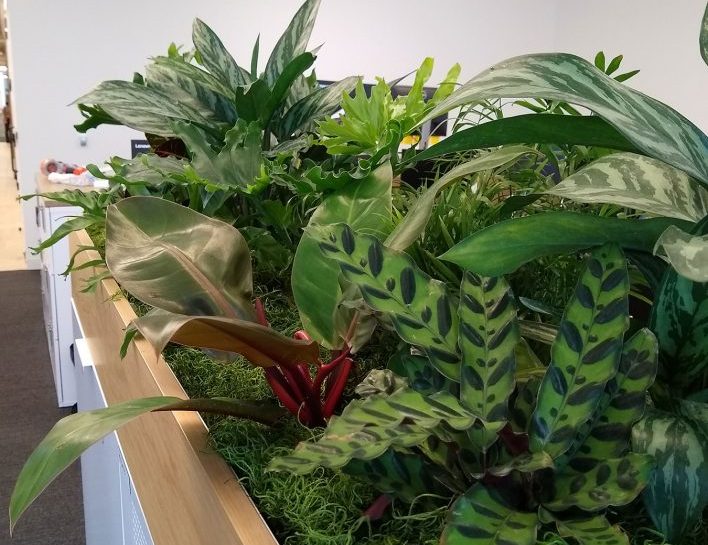
Biophilic design is based on a simple idea: people tend to respond positively to environments that include natural forms, materials, light, texture, and living greenery. In workplaces, that means more than adding plants to empty corners. Thoughtful design considers where employees spend time, how they move through the office, and which natural elements can make those spaces feel more comfortable and visually balanced.
Research into workplace design often links access to natural elements with lower perceived stress, improved satisfaction, and stronger visual comfort. Plants do not replace good ventilation, lighting, ergonomics, or building maintenance, but they can support a healthier-feeling environment when selected and maintained properly. Professional plant design helps connect those benefits with the practical demands of real offices.
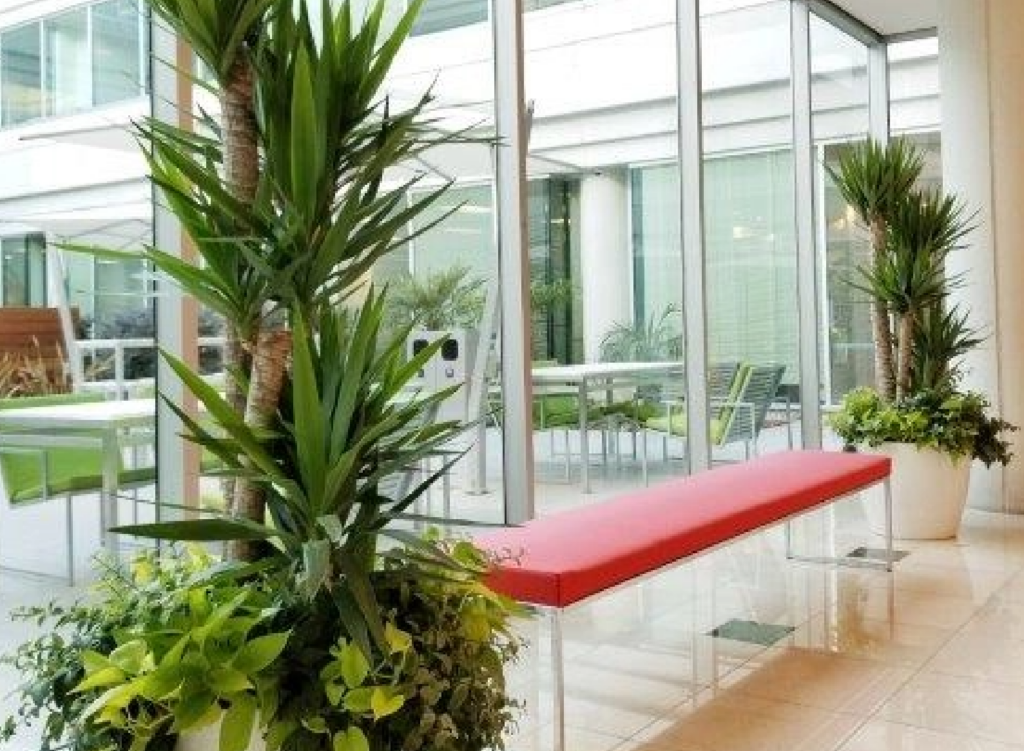
Natural Elements Can Reduce Visual And Mental Strain
Modern work environments are often dominated by screens, straight lines, hard finishes, artificial lighting, and repeated visual patterns. Biophilic design introduces contrast through irregular forms, greenery, texture, and seasonal change. These elements can soften the visual pace of a room and give the eye more varied points of focus.
Workplace greenery can contribute through:
- Living plants that introduce natural shape, color, and movement
- Living walls that bring greenery into areas with limited floor space
- Moss walls that add organic texture without routine watering
- Patio landscaping that extends natural design into outdoor work areas
- Replica plants that provide visual greenery where live plants are impractical
The effect depends heavily on placement. A healthy plant hidden in a rarely used corner contributes less than greenery positioned near entrances, shared spaces, conference rooms, circulation routes, or areas where employees spend long periods.
Plant selection also needs to match real environmental conditions. Light, airflow, temperature, traffic, and maintenance access all influence performance. Guidance on better plant selection reinforces why greenery should be chosen for the actual space rather than appearance alone. When plants remain healthy and properly scaled, they support the design instead of becoming visual clutter.
Biophilic Design Works Through Experience, Not Decoration Alone
The science behind biophilic design is not based on plants functioning as a cure-all. Instead, the value comes from creating environments that feel more connected to natural settings. Humans evolved in environments filled with variation, daylight, vegetation, changing textures, and visual depth. Offices that include some of those qualities can feel less sterile and more restorative.
A successful workplace program may consider:
- Sightlines from desks, meeting areas, and reception spaces
- Natural light and how greenery interacts with changing daylight
- Texture created by foliage, moss, planters, and vertical installations
- Scale so plants complement furniture rather than crowding circulation
- Repetition and rhythm that make greenery feel integrated with architecture
- Maintenance needs that protect the appearance over the long term
Living walls can provide strong visual impact where a room needs a larger connection to nature, while individual plant groupings can create quieter moments of greenery. Moss walls offer another option when texture is more important than active growth. Replica plants may be appropriate where low light or access makes live plants difficult to maintain.
Professional planning matters because biophilic design is strongest when the elements feel intentional. Random placement can create clutter, block sightlines, or place plants where they struggle. A designed program considers how the workplace functions, then uses greenery to support that layout.
Ongoing Plant Care Protects The Benefits Over Time
Biophilic design only works well when natural elements remain attractive and healthy. A neglected plant with dusty leaves, uneven growth, or declining foliage can undermine the polished effect the design was meant to create. This is why maintenance is part of the design process rather than an afterthought.
Professional plant-care programs may include:
- Monitoring soil moisture and adjusting watering to actual plant needs
- Cleaning leaves and containers so displays remain presentation-ready
- Pruning growth that becomes uneven or interferes with the intended shape
- Checking for stress, plant pests, or environmental problems
- Replacing declining plants before the overall display loses consistency
- Repositioning plants when light, airflow, or room use changes
Consistent care also helps the workplace adapt over time. Offices change as teams move, furniture is rearranged, lighting shifts, or seasonal conditions affect interiors. A maintained plant program can adjust with those changes instead of becoming outdated.
The connection between care and workplace wellness is also important. Discussion of healthy workplace greenery highlights that plants should be viewed as one part of a larger workplace-health strategy. Ventilation, cleanliness, humidity control, lighting, workload, and employee comfort all matter. Well-maintained greenery can support the atmosphere without replacing those systems.
Biophilic design is most effective when science and practical design work together. Plants, living walls, moss walls, replica greenery, and patio landscaping can add natural cues that soften commercial interiors and make workspaces feel more considered. The goal is not to fill every surface with plants. It is to introduce the right natural elements in the right places, then maintain them so the experience remains consistent.
Bring More Nature Into The Workday
If your workplace would benefit from professionally planned greenery, living walls, moss walls, replica plants, or patio landscaping, contact Creative Plant Design, Inc. for expert design, installation, and long-term plant care.