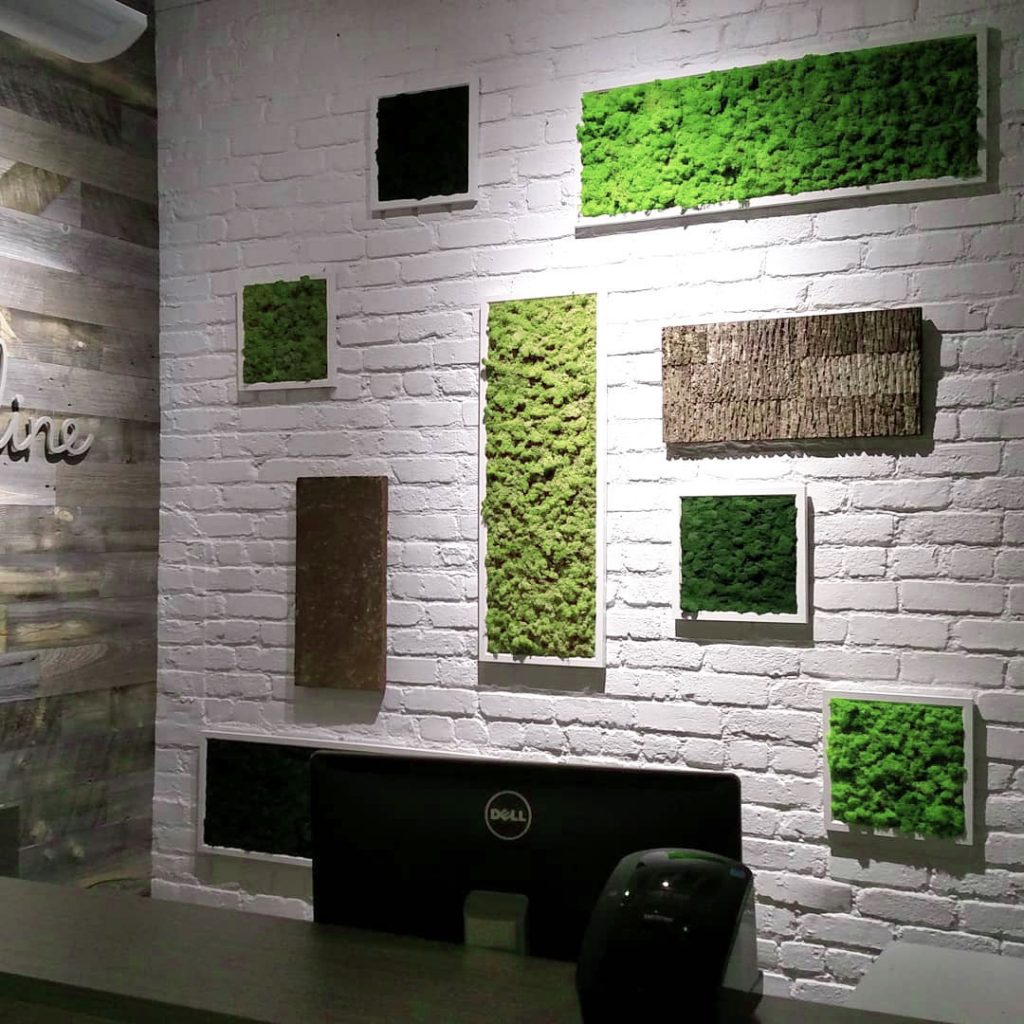
A custom moss art wall may look effortless once installed, but the finished piece reflects a detailed process involving space evaluation, material planning, artistic composition, fabrication, and precise installation. Preserved moss is not arranged at random. Every color, texture, frame, and branded element must work with the architecture.
Professional designers approach the project as both art and commercial interior design. They consider wall dimensions, sightlines, traffic flow, brand identity, and long-term presentation. This behind-the-scenes work allows the installation to feel intentional and specific to its setting rather than like a generic decorative panel.
Site Evaluation Defines The Creative Direction
The first stage begins at the property. Designers study the proposed wall and its surroundings to understand what the feature needs to accomplish. A reception area may require a strong focal point, while a conference room may benefit from quieter texture.
The evaluation may consider:
- Wall dimensions, surface condition, and installation access
- Viewing distance from entrances, seating, and walking paths
- Existing colors, finishes, furniture, signage, and architectural lines
- Desired mood, brand character, and visual impact
- Nearby live plants, living walls, replica plants, or seasonal décor
Accurate measurements prevent a piece from disappearing on a large wall or competing with reception activity and signage. Professional evaluation establishes workable proportions before fabrication begins.
Design Planning Connects Nature With The Interior
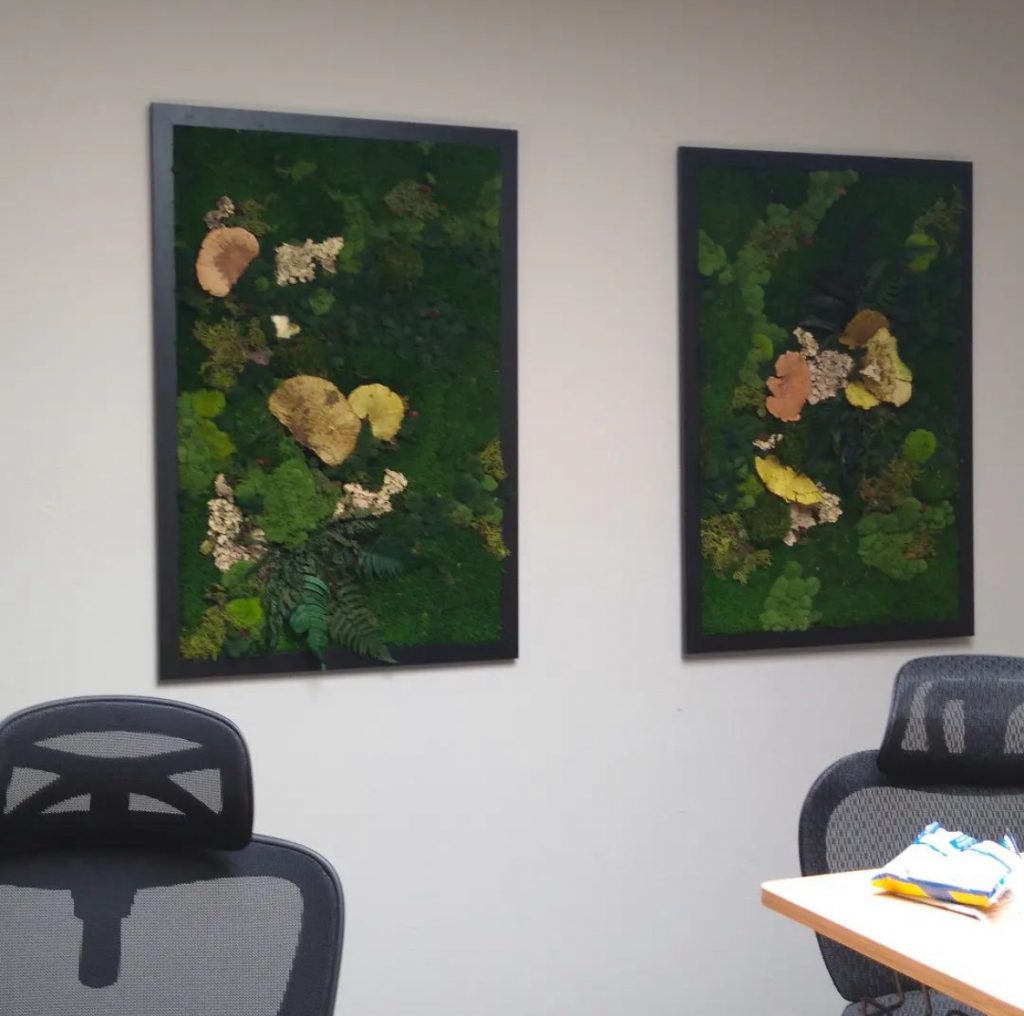
Once the space is understood, the concept moves into design development. Preserved moss can provide soft coverage, sculptural depth, color variation, or organic movement. Reclaimed wood, stone, replica foliage, succulents, lichen, and other dried natural materials may also be incorporated when they support the concept.
The planning process benefits from the same environmental awareness used in professional plant care. Commercial greenery should fit the room’s layout, traffic, and presentation goals. Although preserved moss does not require routine watering, the installation still needs thoughtful placement and a design that complements nearby displays.
Designers refine the palette, density, edges, focal areas, and frame treatment before production. For branded installations, they determine whether a logo should be formed from moss, attached over the panel, or surrounded by natural textures. These decisions help the moss art wall communicate identity clearly.
Material Selection Shapes Texture And Longevity
Material selection shapes how the artwork reads at close range and across the room. High-quality preserved moss provides consistent color and texture without the watering, pruning, soil care, or lighting demands associated with living plants. Different varieties create contrast and movement.
A professional material plan may include:
- Preserved moss in coordinated colors and varied textures
- Reclaimed wood or stone for natural contrast
- Framing in white, black, espresso, or another suitable finish
- Replica foliage, succulents, lichen, or dried botanical accents
- Secure backing materials selected for the wall and panel size
Preserved moss is naturally biodegradable, and selected materials may also offer fire-retardant and acoustic-modulating qualities. Designers check color consistency, attachment strength, seams, and alignment with the planned pattern.
Hand-Crafting Turns The Concept Into Artwork
Fabrication is where the design takes physical form. Moss is arranged by hand, allowing creators to control transitions, contours, density, and visual rhythm. Larger compositions may be built in sections so they can be transported and installed safely without weakening the overall design.
Current office plant trends show growing interest in moss installations for low-light interiors, branded photo areas, hallways, and reception zones where natural texture is desired without regular plant care. Each section must still align with the full composition.
During fabrication, specialists may:
- Build layered areas that create depth without excessive bulk
- Blend colors so transitions appear natural rather than striped
- Position wood, stone, or botanical accents for balance
- Integrate logos while preserving readability and proportion
- Inspect edges and seams before panels leave the workshop
Every wall, logo, and design brief requires a different hand-crafted approach. Experienced creators make small adjustments throughout production so the artwork remains cohesive from multiple viewing angles.
Installation Completes The Custom Experience
Installation requires careful coordination with the property. Access, wall construction, panel weight, surrounding furniture, business hours, and pedestrian movement can influence how the work is scheduled and secured. The team verifies measurements, protects nearby surfaces, aligns each section, and checks the presentation under the room’s actual lighting.
Once mounted, the artwork is reviewed for level placement, clean edges, secure attachment, and uninterrupted visual flow. Any logo or dimensional element must sit correctly within the composition. Professional installation also reduces disruption in active commercial environments.
A preserved moss wall requires no regular watering or sunlight, but appropriate care still protects its appearance. It should remain indoors, away from unnecessary handling and unsuitable environmental exposure. Clear guidance helps property teams preserve its color, texture, and finished quality over time.
The result is not simply a wall covered in moss. It is a site-specific piece shaped through design judgment, material knowledge, hand-crafted construction, and installation expertise.
Give Your Walls A Natural Signature
Contact Creative Plant Design, Inc for a custom moss art wall designed, crafted, and installed around your commercial space and brand.